CBA and Police Establish a Joint Coordination Team
The Head of the Central Anti-Corruption Bureau and the Commander-in-Chief of the Polish Police have established a joint coordination team. Cooperation within the team will include obtaining and collecting information, as well as the ongoing exchange of experience and conclusions arising from the performance of statutory duties.
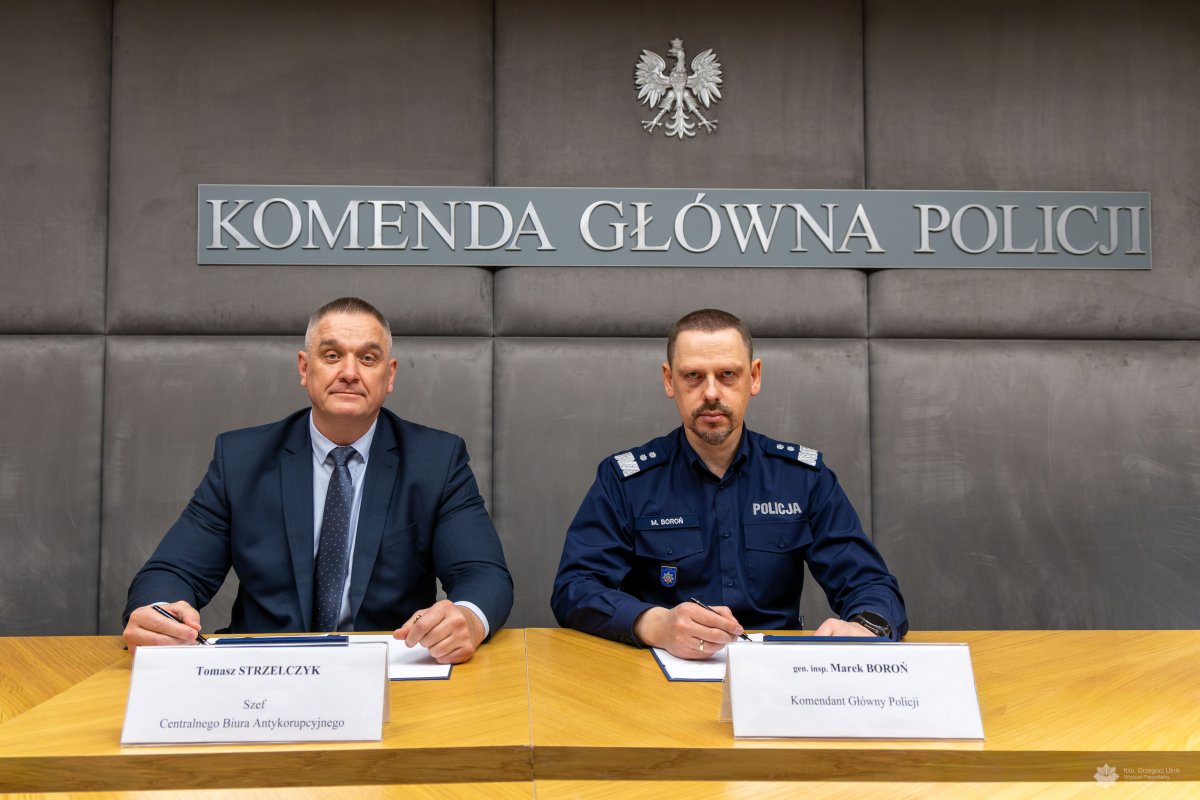
On 14 October 2026, the Head of the Central Anti-Corruption Bureau, Tomasz Strzelczyk, and the Commander-in-Chief of the Polish Police, General Inspector Marek Boroń, signed a decision establishing a joint coordination team for both services.
The establishment of the team marks another step towards strengthening cooperation between the Central Anti-Corruption Bureau and the Police. The signed document sets out the principles of cooperation, particularly regarding the acquisition, collection and ongoing exchange of information, as well as the sharing of experience and conclusions drawn from the performance of the statutory duties of both services.
The signing ceremony was also attended by the Provincial Police Commander in Bydgoszcz, the Director of the Economic Crime Bureau of the National Police Headquarters, the Director of the CBA Regional Office in Bydgoszcz and the Director of the Office of the Head of the CBA.
Effective Coordination of CBA and Police Activities
Close cooperation between services responsible for combating corruption-related crime will improve the coordination of activities, enable more efficient use of available resources and enhance the effectiveness of their operations.
Joint efforts by the Central Anti-Corruption Bureau and the Police will facilitate the ongoing exchange of information, improve the coordination of operational activities and reduce the risk of duplication of efforts. This cooperation will be particularly important in complex cases requiring specialist knowledge and the involvement of both services. The complexity of such cases, their potential legal, financial and social consequences, and their possible impact on public trust in state institutions highlight the need for effective coordination and appropriate oversight of ongoing activities.
The signed decision provides a formal framework for cooperation between the two services, establishing a basis for efficient coordination and proper supervision of their activities.
Cooperation to Strengthen the Fight Against Corruption
Cooperation between the Central Anti-Corruption Bureau and the Police will enable a comprehensive approach to particularly difficult and complex cases, improve the detection of corruption-related offences and contribute to better protection of the public interest. Combining the knowledge, experience and expertise of both services will facilitate more effective performance of tasks related to combating corruption and other forms of crime.
Joint operations and initiatives undertaken by the Central Anti-Corruption Bureau and the Police will help increase the effectiveness of investigations and improve the identification of perpetrators of corruption-related offences.
Effective institutional cooperation, based on information sharing and the use of complementary expertise and capabilities, is essential for national security and the protection of the state's economic interests.
CBA Press Team
-
CBA